
Do Kids Need Swim Lessons If We Have a Shallow Pool?
It’s a question many parents consider when thinking about swim lessons:
“Do kids really need swim lessons if we only have a shallow pool?”
At first, it may seem like shallow water reduces risk. If a child can stand, it can feel like there’s less to worry about.
But water safety isn’t just about depth — it’s about how children respond, move, and stay calm in the water.
For families in Southern California, where children are frequently around pools, water play areas, and changing environments, understanding this difference is important.
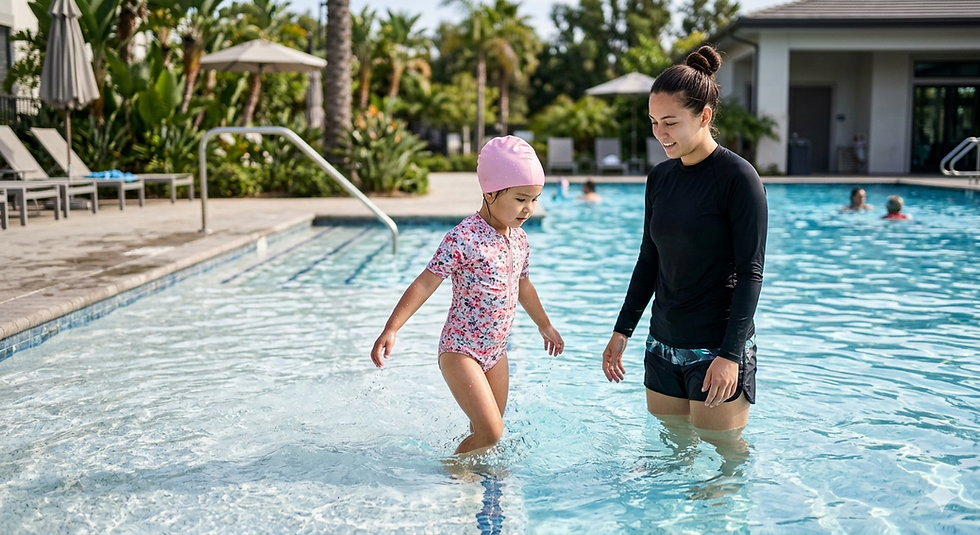
Why Pool Depth Can Be Misleading
Shallow water may seem safer, but it doesn’t eliminate risk.
Children can still:
Slip and fall unexpectedly
Lose balance and submerge briefly
Panic when water reaches their face
Move into deeper areas without realizing it
Even a small amount of water can feel overwhelming if a child is not prepared.
What Really Matters: Water Confidence and Control
Safety in the water is less about how deep it is and more about how comfortable a child is.
Children who are more prepared tend to:
Stay calm when water touches their face
Control their breathing
Recover quickly if they lose balance
Move toward a safe position
These responses are developed through exposure and practice.
The Role of Swim Lessons in Shallow Water Environments
Swim lessons help children build foundational skills that apply in any depth of water.
These include:
Breath control
Floating
Turning toward safety
Regaining balance
Understanding how to respond
Even in shallow water, these skills help children stay more confident and composed.
When Shallow Pools Can Still Present Challenges
Shallow pools can introduce situations like:
Slippery surfaces
Crowded play environments
Unexpected splashes or distractions
Gradual slopes into deeper areas
Without preparation, these moments can lead to hesitation or panic.
Why Early Skill Development Matters
Children who build skills early are more likely to:
Feel comfortable in different water environments
Adjust to new pool settings
Stay calm when situations change
Develop long-term confidence
These benefits carry over into deeper water, beaches, and other real-world scenarios.
How Parents Can Think About Water Safety
Instead of focusing only on depth, it helps to think about:
How your child reacts to water
Their comfort putting their face in
Their ability to recover balance
Their confidence moving independently
These are stronger indicators of readiness than water depth alone.
Why This Matters in Southern California
In areas like Orange County and the Inland Empire, children are often exposed to:
Backyard pools
Community splash areas
Beaches
Vacation settings
Even if a child spends most of their time in shallow water, they are likely to encounter different environments over time.
Preparing early helps them adapt more easily.
For families throughout Southern California, helping children build confidence and comfort in the water is an important step in developing long-term safety and awareness. Premier Swim Academy offers structured swim programs designed to help children learn how to move, respond, and stay calm in a variety of water environments.
Parents who want to explore swim lesson options can learn more by visiting https://premierswimacademy.com/.
Frequently Asked Questions
Is shallow water safe enough for kids without swim lessons?
Shallow water can feel safer, but it doesn’t remove all risks. Children can still slip, lose balance, or feel overwhelmed if they are not comfortable in the water. Swim lessons help children develop the skills needed to respond calmly and safely in these situations.
Can a child learn water safety just by playing in a shallow pool?
Play helps with exposure, but structured learning introduces important skills like breath control, floating, and movement toward safety. These skills are not always developed through play alone.
What is the biggest risk in shallow pools?
One of the biggest risks is a child becoming disoriented or panicking when water reaches their face. Without experience and comfort, even shallow water can feel overwhelming.
Do swim lessons still help if my child can already stand in the pool?
Yes, because swim lessons focus on how children move, react, and stay calm in the water — not just whether they can stand. These skills apply in all water environments.
When should kids start learning water skills?
Children can begin developing water comfort and basic skills at a young age. Early exposure helps build confidence and prepares them for more advanced learning over time.


Comments